“I don’t notice it in daily life, but after about 5 km of running, the inside of my right knee starts to hurt. Lately the pain comes at around 5 km, so I can’t run long distances any more. I have a race coming up, and I want to do something about it.”
Ms Y, a woman in her 40s, had taken up trail running about four years earlier, and her right knee had gradually become painful. A friend who had visited the clinic before recommended us. The painful spot was the inner side of the knee — the pes anserine, where the tendons of three muscles (sartorius, gracilis and semitendinosus) attach to the shin bone just below the knee. When that area becomes inflamed from overuse and swells or hurts, it is called pes anserine pain (pes anserinitis).
The patient
- Age / sex: 40s, female
- Activity: trail running (started about 4 years earlier)
- Problem: pain on the inner side of the right knee after about 5 km of running; also pain going up and down steps; hip pain at times
- History: multiple ankle sprains in the past; tends to fall often when running
Checking the symptoms
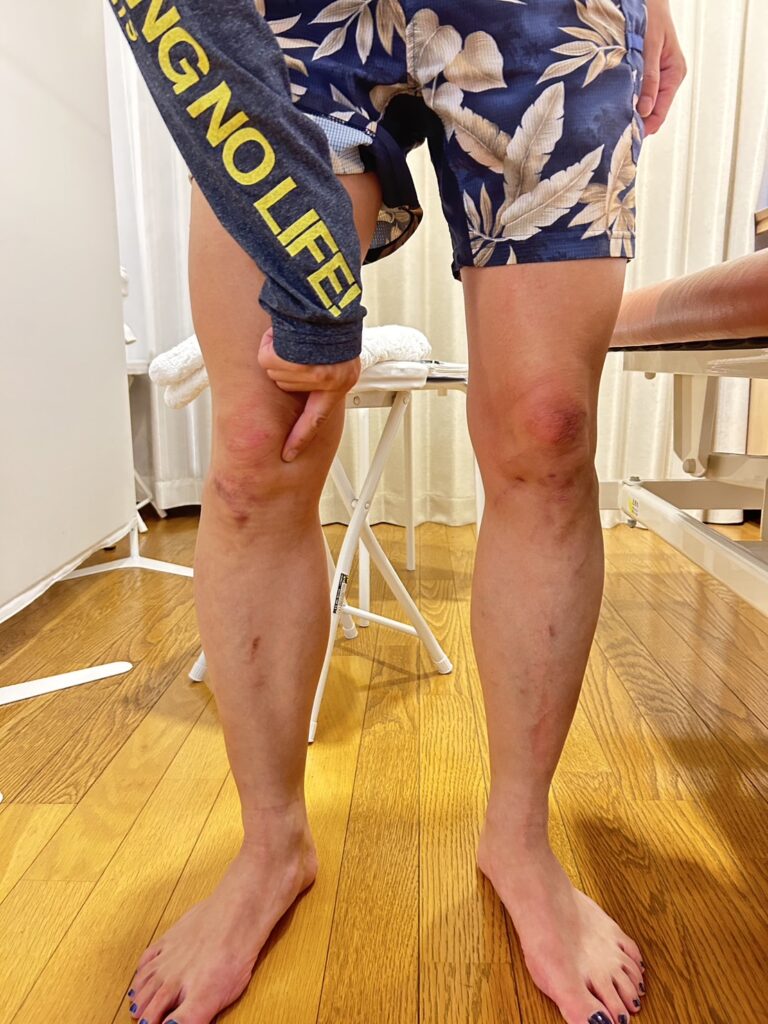
The pain was at the inner side of the knee joint, as she pointed to it. She did not notice it in daily life, but it also appeared when climbing steps, and when going down steps it came at the moment of landing.
Checking the fascia
Fascia becomes stiff — losing its glide — mainly through injury (muscle strains, fractures, sprains and other trauma), overuse, or underuse (such as immobilization in a cast). Once fascia has stiffened, it does not recover easily on its own; left alone, the stiffness can keep affecting other parts of the body, through restricted movement, pain or abnormal sensation.
From her history, two likely factors stood out in Ms Y’s case:
- Past multiple sprains (injury)
- Trail running (overuse)
Because she also had hip pain at times, we checked the fascia mainly from the hip down to the lower leg. Several points were stiff, away from the painful spot itself.
The course of treatment
First session. Of the stiff points found, we treated the ones that felt in the worst condition. After the session, the knee pain had dropped to zero.
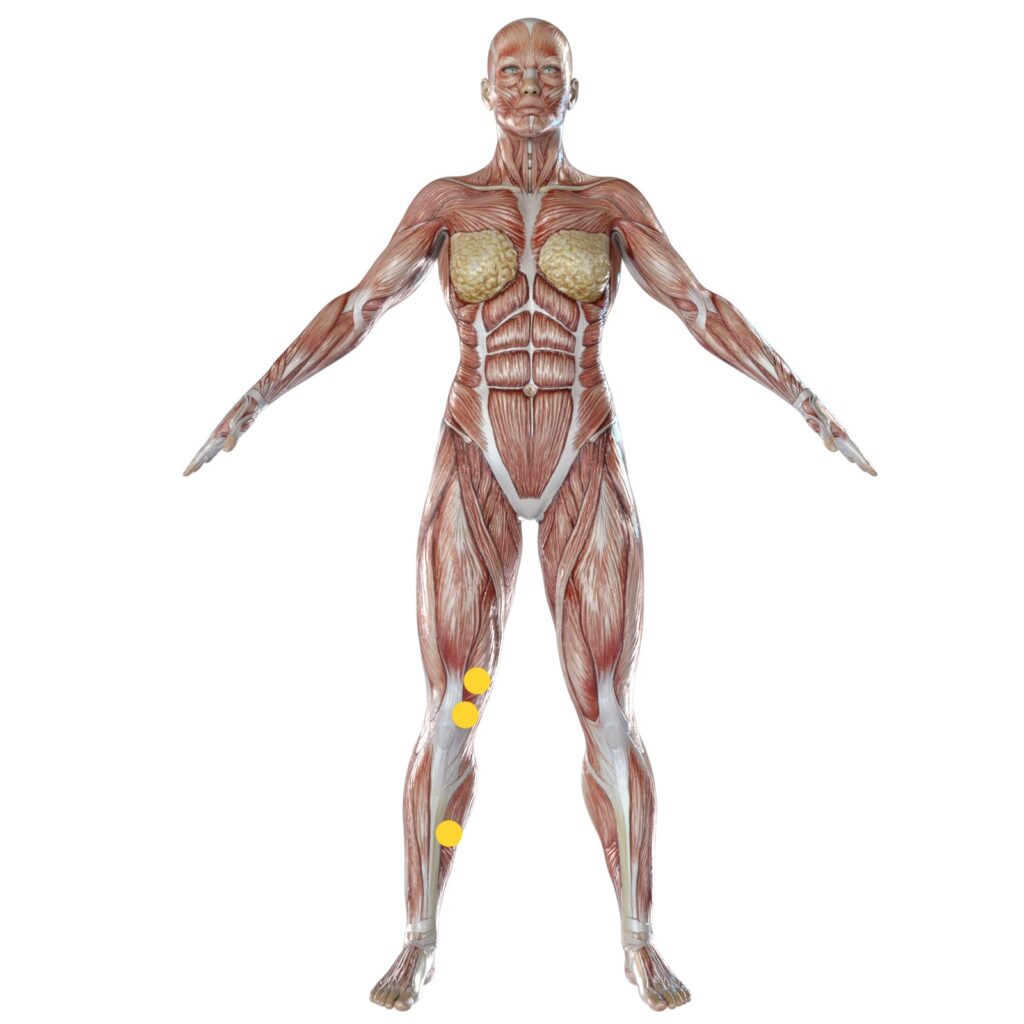
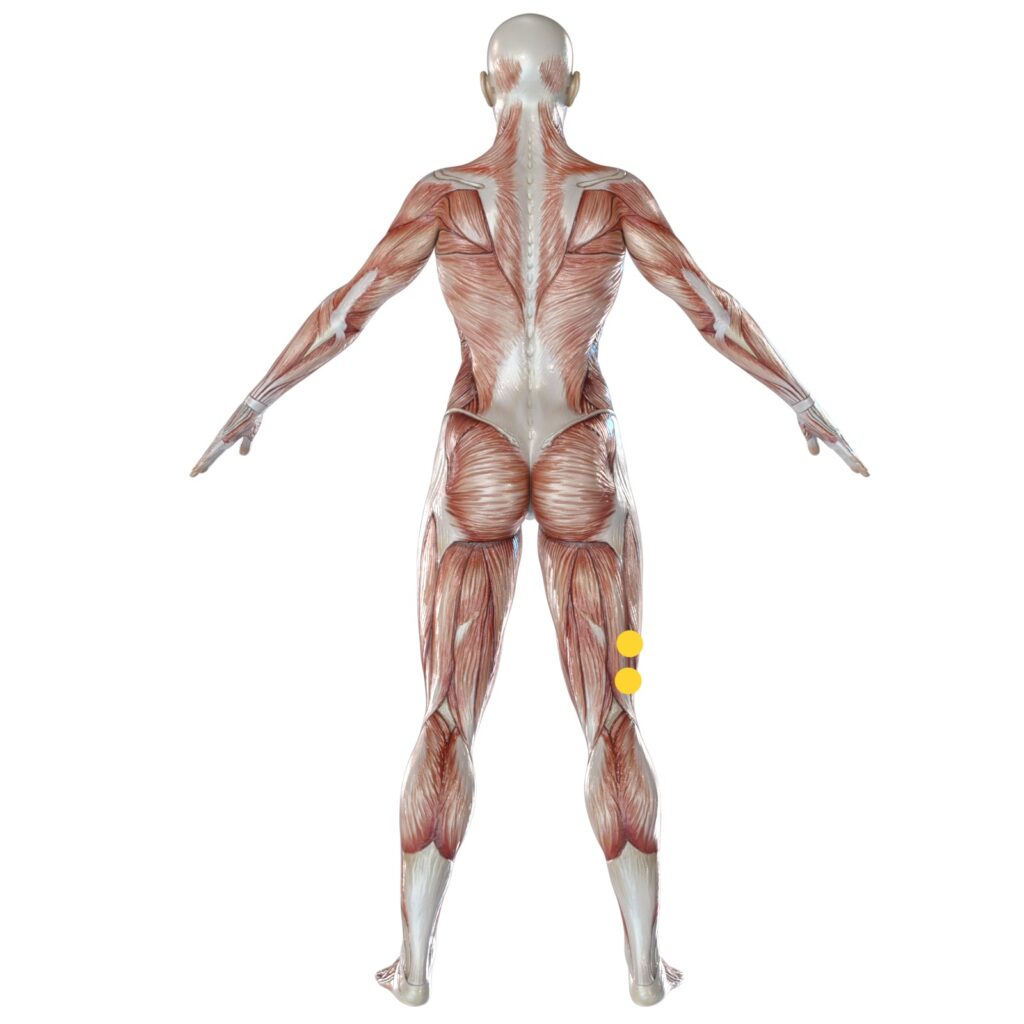
Follow-up, about two weeks later. The right knee pain had settled completely, and she told us she had been able to resume running.
Further sessions. With a race approaching and training becoming harder, the later sessions treated a different concern: pain from her left buttock into the hamstring.
Why she may have kept falling
Ms Y told us she “falls over a lot.” Trail running is on uneven mountain paths, so falls happen — but there may be a reason her falls were more frequent than other people’s.
Fascia contains sensors that feel how your body is moving when you move or exercise, and that information is sent to the brain. When fascia is in poor condition, that sensor role declines as well: the brain cannot accurately receive the information about what movement the body is making, and a gap opens between the movement you imagine and the movement you actually perform.
In Ms Y’s case, repeated sprains on top of running overuse may have stiffened her fascia, so that she could not “receive accurate information and make accurate movements” — which could be why she fell more easily than others. And when accurate movement is not possible, load concentrates on particular areas: someone who injured an ankle can develop symptoms in the knee or hip instead. Ms Y indeed had hip (buttock-area) pain as well as the knee pain.
At this clinic we take a history of past injuries, sports and daily habits, and treat what appears to be the underlying cause of the symptoms — in cases like this, problems that have not settled anywhere else may have a fascial thread worth following.
This clinic is not a medical institution. Individual results vary; this article describes one person’s course. If you have concerning symptoms, please consult a medical institution.