
“Even sweeping and writing are hard, the numbness is so strong…”
Ms Y, a Buddhist priest in her late 40s, had spent three and a half years in a training monastery — sweeping, clipping the garden, carrying heavy loads, every day. What began as a vague discomfort gradually became numbness through the palms of both hands.
The patient
- Age / sex: late 40s, female
- Work: Buddhist priest (in training at a monastery)
- Problem: constant numbness in both hands, mainly from the palm into the index and middle fingers; worse when sweeping or writing
- History: diagnosed with carpal tunnel syndrome at an orthopedic clinic; chiropractic care helped temporarily, but the numbness kept returning
In her own words: “At the orthopedic clinic I was diagnosed with carpal tunnel syndrome. My hands are numb all the time, even when I’m resting. Work uses my hands so much that even writing is difficult — it interferes with everything and it’s stressful. Chiropractic helped at the time, but it always came back. So I looked for a new approach, and found this clinic.”
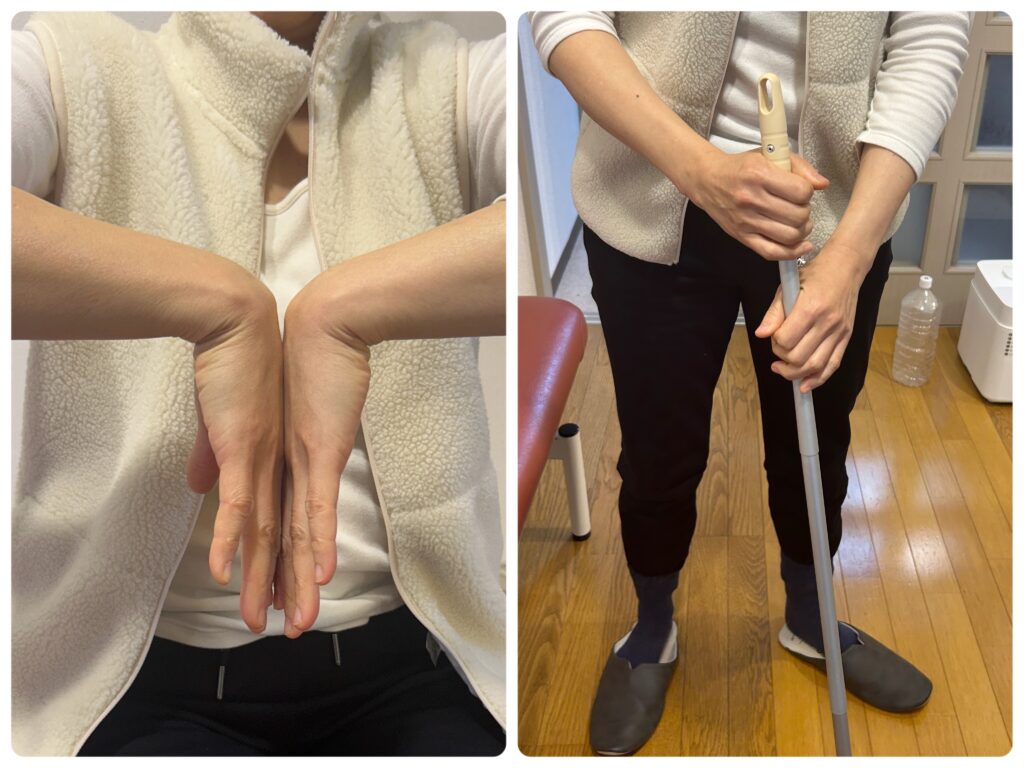
What is carpal tunnel syndrome?
Carpal tunnel syndrome is a condition in which the median nerve — the nerve that gives the fingers their feeling and movement — is compressed where it passes through a tunnel-like space at the base of the wrist called the carpal tunnel.
Main symptoms:
- Numbness or pain from the thumb to half of the ring finger
- Numbness that grows stronger at night and in the early morning
- Some relief from shaking the hand or bending and straightening the fingers
- As it progresses, the muscle at the base of the thumb can waste away, making pinching difficult
Overuse of the hands is a common cause. It also occurs often in women around pregnancy and the menopause, so changes in female hormones are thought to play a part. Standard care includes a wrist support to rest the wrist, injections around the wrist, and massage.
Why did the numbness keep coming back?
Other treatments eased things for a while. Why did the numbness always return?
From the Fascial Manipulation® point of view, the root cause of pain and numbness is not always in the painful spot itself. There is no doubt that Ms Y’s years of heavy hand use were the direct trigger. But if only the hand is loosened, or the skeleton adjusted, while stiffness remains in the fascia of the arm and the trunk that connect to the hand, the symptoms can quickly return.
The fascia wraps the whole body like a single bodysuit: when the back or the elbow is being pulled, the cuff — the hand — is pulled tight too.
Why we looked at the trunk — and at hormones
The tissue that forms the pathway for nerves, and that wraps the nerves themselves, is also part of the fascial family. Fascia normally works like a lubricant, letting muscles and nerves glide smoothly. When fatigue builds up too far, the fascial layers begin to stick to each other — a loss of fascial glide. We reasoned that years of overuse had stiffened the fascia around the nerve in exactly this way.
Ms Y being a woman in her late 40s was another key. Estrogen, a female hormone, helps keep muscles, tendons and fascia supple and hydrated. As hormone balance begins to change in the 40s, the fascia throughout the body loses moisture more easily, and its glide declines.
So her case may have been two things at once: the physical load of demanding daily work, layered over fascia that had become less slippery as her hormones changed.
One more point we weighted heavily: the symptoms were in both hands. If the right and left hands are numb at the same time, the load may be sitting in the trunk fascia, which ties the two arms together at their root. So rather than looking only at the hands, we carefully checked the stiffness of the trunk fascia that connects left and right.
The course of treatment
First session — from the trunk to the right hand. We treated the fascia from the trunk through her whole dominant right hand. Right there, the numbness in her right hand disappeared completely. “That’s strange,” she said, surprised.
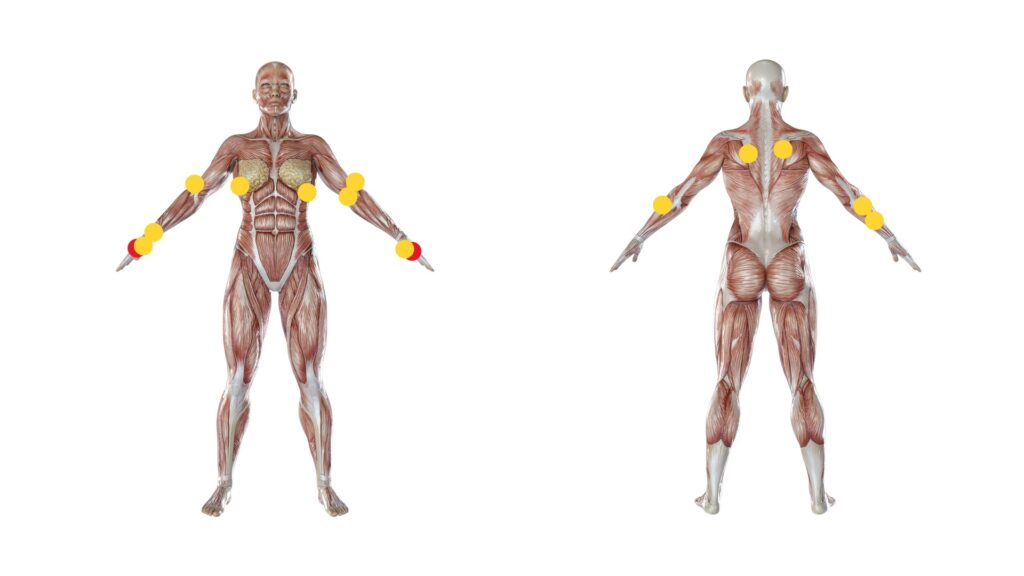
Second session — one week later, the left hand. She came back with good news: “Since that day, the numbness in my right hand hasn’t come back at all!” This time we worked mainly on the left hand — and its numbness, too, disappeared on the spot.
Two years later. She recently visited again after two years, this time for a different problem. Asked about her hands, she smiled: “Since then, I haven’t had that constant numbness. My hands sometimes tingle if I overuse them, but compared with before I came here, it’s completely different!” That day we treated the carpal tunnel symptoms together with stiffness in her shoulder.
Back to her work, without thinking about her hands
Freed from the numbness she used to feel constantly, the discomfort when writing is gone too, and she can devote herself to her training and her duties without anxiety. She seemed to feel afresh how precious the ordinary thing — being able to use your hands — really is.
If your hands are numb, too
“I work with my hands, so it can’t be helped.” “I’ve tried all sorts of things, but the numbness and pain always come back.” If that sounds familiar, please feel free to consult us. The cause of your numbness may be hiding somewhere other than your wrist or fingertips — in your trunk or your arm. Fascial Manipulation® reads your history of habits and symptoms and looks for the root cause along the connections of the whole body.
This clinic is not a medical institution. Individual results vary; this article describes one person’s course. If you have concerning symptoms, please consult a medical institution.