Mr H, a man in his 40s, plays futsal once a week as a hobby. The day after playing, he always had tightness and pain in his buttock, with a tingling numbness as well. When it was bad, the pain and tightness reached into his thigh, and long sitting hurt too — perhaps from the pressure. A month and a half passed without improvement, so he searched online and came to us.
The patient
- Age / sex: 40s, male
- Work: desk work
- Hobby: futsal once a week; kendo from elementary school to high school
- Problem: tightness, pain and tingling numbness in the buttock the day after futsal; pain when sitting for long periods; sometimes pain and tightness into the thigh
- History: no past injuries
Checking the symptoms
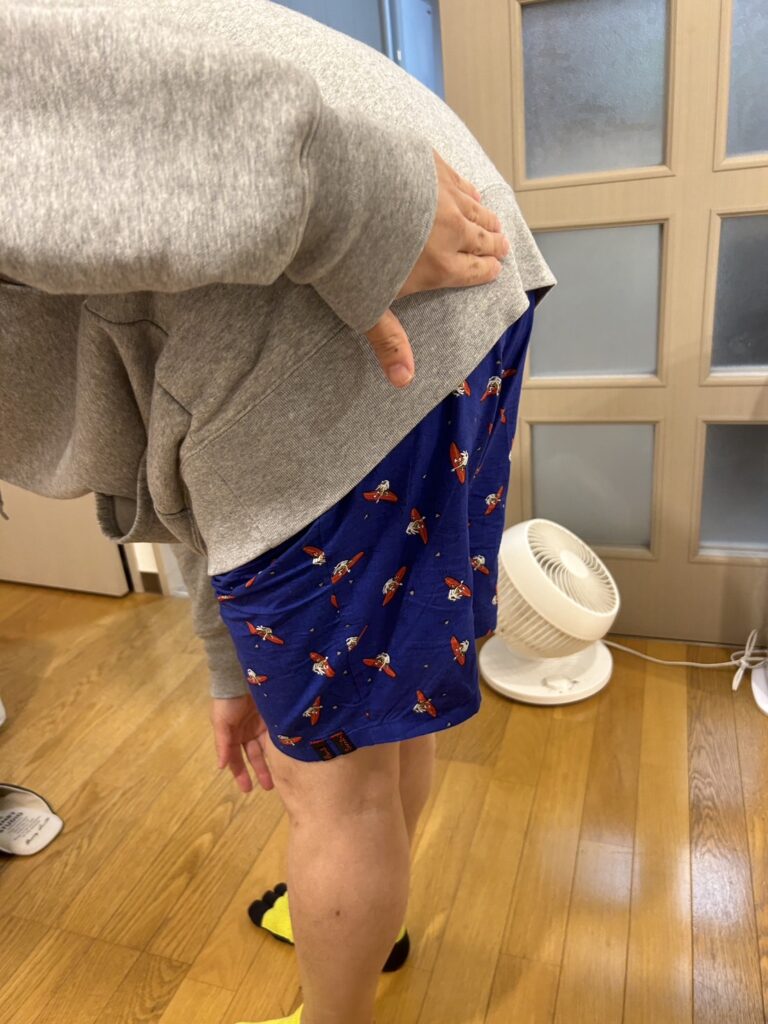
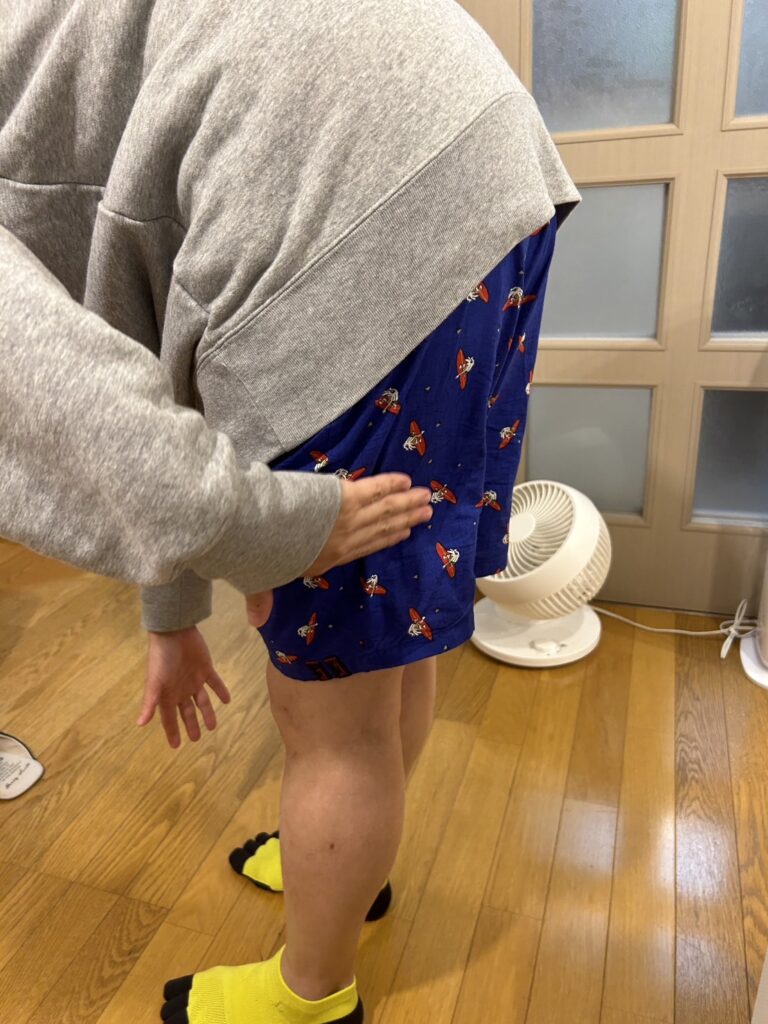
First, where it hurt: the buttock, where his hand rests in the article’s photo. Bending forward to about the angle shown made the tightness and pain stronger.
Checking the fascia
Fascia stiffens — loses its glide — mainly through injury (strains, fractures, sprains and the like), overuse, and underuse (such as immobilization in a cast). And once fascia has stiffened, it does not easily return to normal on its own. Left unaddressed, the stiffness can keep affecting other areas: restricted movement, pain, abnormal sensation.
From his history, three things in Mr H’s life looked likely to have stiffened his fascia:
- Desk work, with long hours sitting (underuse)
- Futsal once a week (sudden overuse)
- Kendo from elementary school through high school (past overuse)
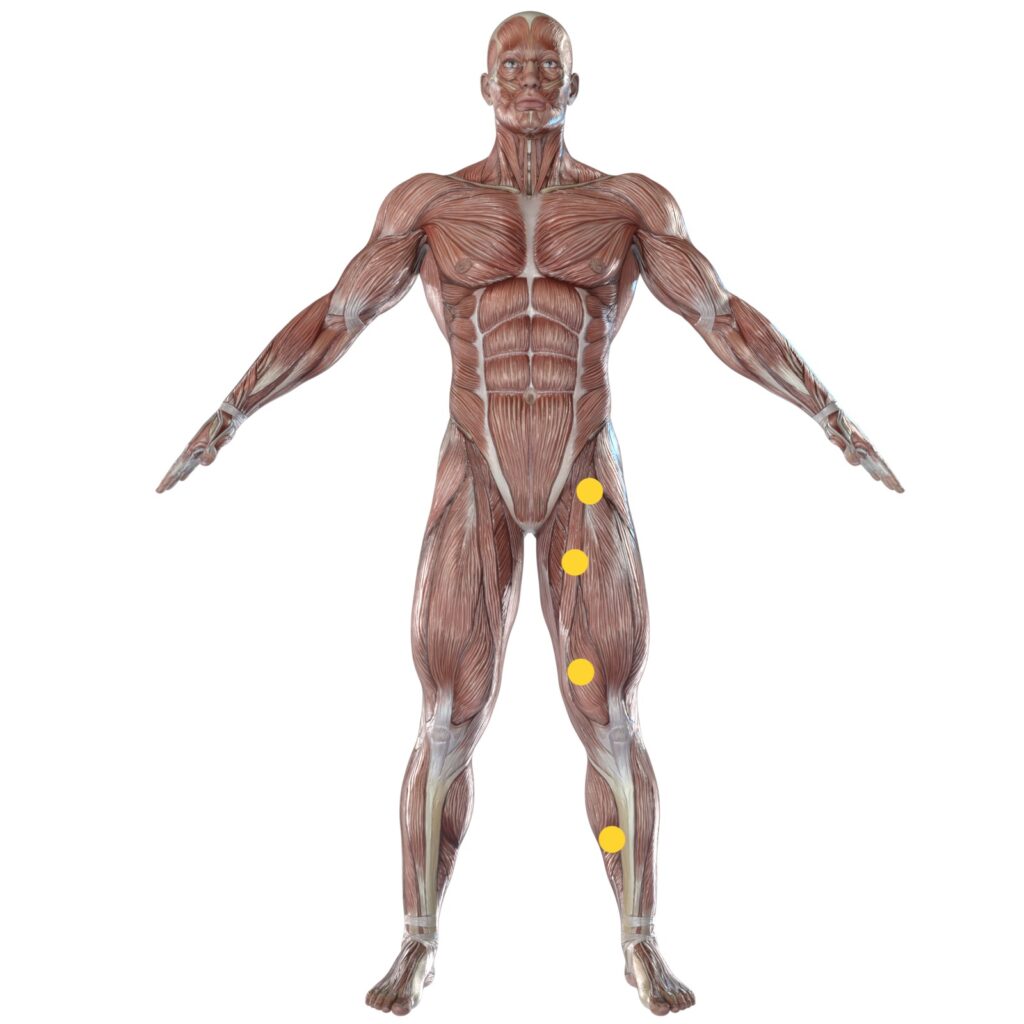
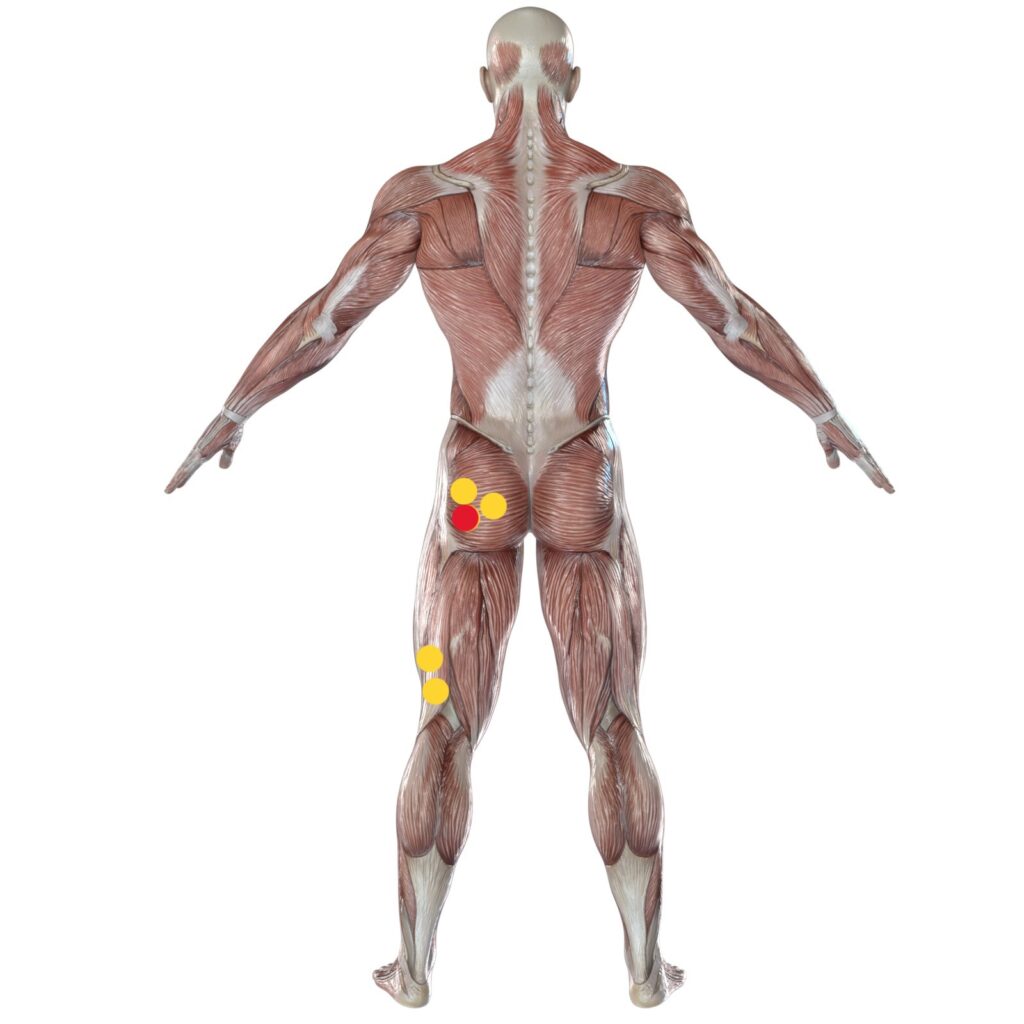
He had no injury history, so we checked mainly from the hips down through the lower legs, marking where it hurt and where the fascia had stiffened.
The course of treatment
First session. Several points had stiffened fascia; we treated the ones that felt in the worst condition. Afterwards, the tightness and pain in his buttock improved.
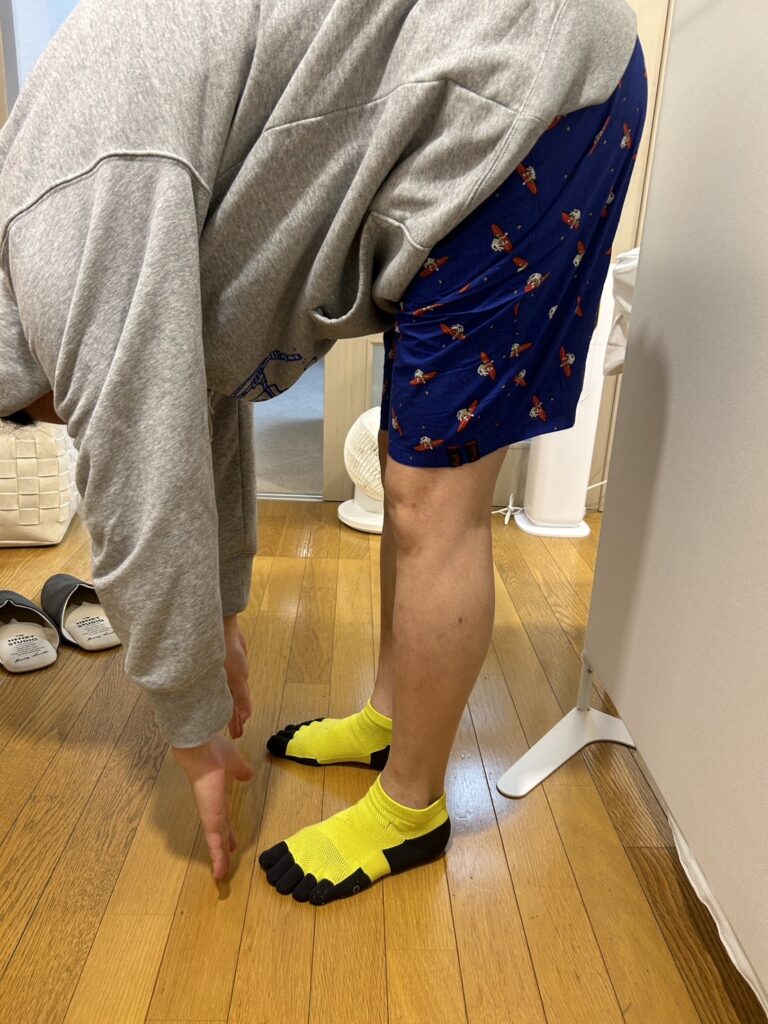
Second session — two weeks later. The buttock symptoms had improved, but the tightness and pain now seemed to have moved into the back of the thigh when he bent forward. We checked the fascia again; this time stiff points were found over a wider area than the first session, and we treated those. Afterwards, the tightness fell to zero, and his forward bend improved until he could touch the floor.
In summary
In Mr H’s case, the likely causes of the stiffened fascia were the three factors above. His work is basically desk work — it is easy to imagine the body, and the fascia, stiffening through the day. Playing futsal only once a week on top of that is a heavy load, which is probably why the symptoms flared after playing. And the kendo from his school years matters for the same reason: playing one sport means repeating particular movements, so particular places take the load — and stiffened fascia does not recover easily on its own. Patients often ask, “Can something that long ago really be a factor?” For the reasons above, it is actually quite important when we plan treatment.
It may be a misunderstanding, but fascia is not only the membrane that wraps muscles. It wraps everything in the body — bones, internal organs, blood vessels and nerves. If that fascia stiffens and loses function, is it any wonder that nerve-pain-like symptoms appear?
If, like Mr H, you are troubled by sciatica-like symptoms, fascial treatment may help you too. Our director himself suffered from sciatica-like symptoms, and they improved with fascial treatment. Why not try it as a new approach?
This clinic is not a medical institution. Individual results vary; this article describes one person’s course. If you have concerning symptoms, please consult a medical institution.