
“Will I go on like this, unable to do even the basic poses properly?”
Ms Y, a yoga teacher with ten years of practice, had pain around her right outer ankle every time she took padmasana (lotus pose). Two and a half months after spraining her ankle on stairs, poultices had not shifted the discomfort. It broke her concentration and left her anxious. The clue lay away from the painful spot.
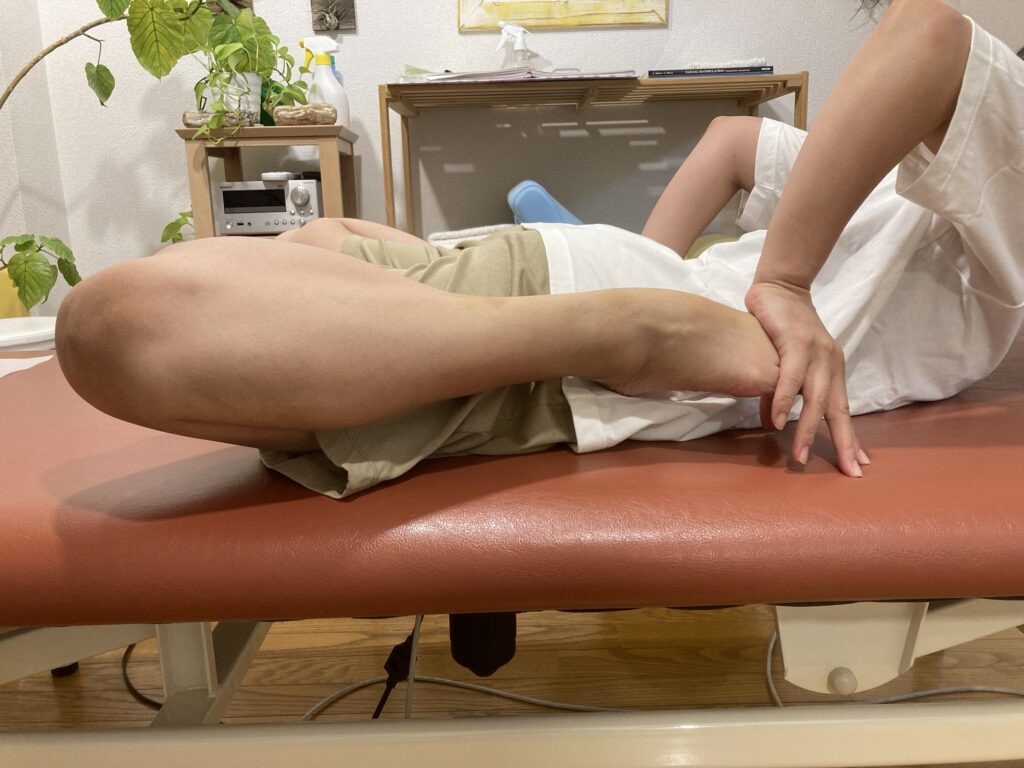
The patient
- Age/sex: 40s, female
- Work: yoga teacher (10 years of yoga)
- Problem: pain around the right outer ankle in padmasana; discomfort in the same place in seiza
- History: cervical disc herniation diagnosed a year earlier, with numbness from the right neck into the arm — now settled, and judged unrelated
How it happened
Two and a half months before her visit, she missed a step on stairs and twisted her ankle. An orthopedic diagnosis of a sprain led to medicated poultices, but the pain and discomfort were still there. “Padmasana is a basic yoga pose — without it, it isn’t really yoga. It hurts every time, it’s so frustrating, and I can’t concentrate because I’m thinking about the ankle.” She tried various care without change.
Why the ankle itself may no longer be the problem
Damaged ligaments and tissue are generally repaired by about six weeks. At about ten weeks, when surface care was not easing it, the ligament damage itself was no longer the issue. Fascial Manipulation® does not assume that where you feel pain is where the cause is; past injuries and daily loads accumulate, and pain appears at the end of the chain.
What we focused on: loss of fascial glide
Ten years of teaching yoga had placed daily load on the lower body, and the leg fascia may have lost flexibility. The sprain added a strong impact, and stiffness in the calf and thigh fascia pulling on the ankle fascia was keeping it sensitive.
The course of treatment
Session 1: we treated the fascia from around the right calf down to the foot. She immediately tried padmasana — the pain no longer bothered her.
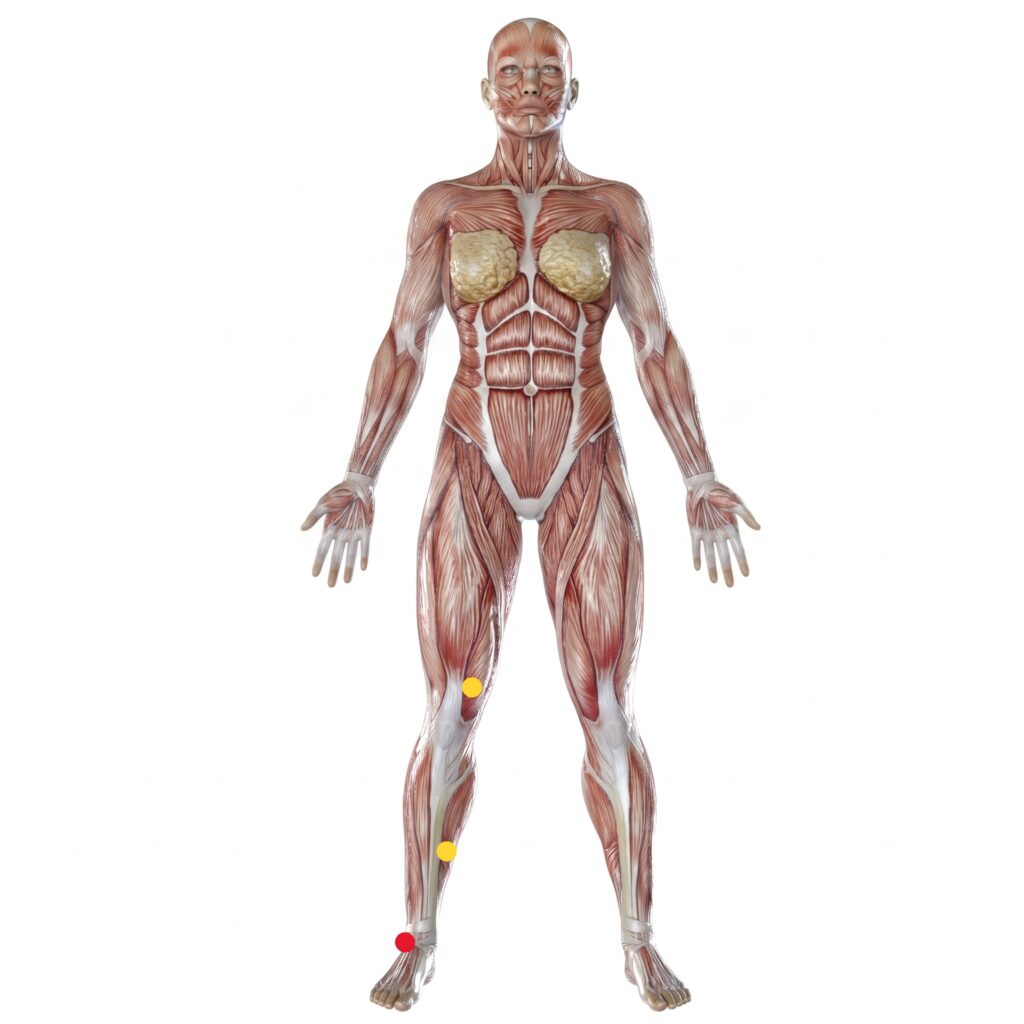
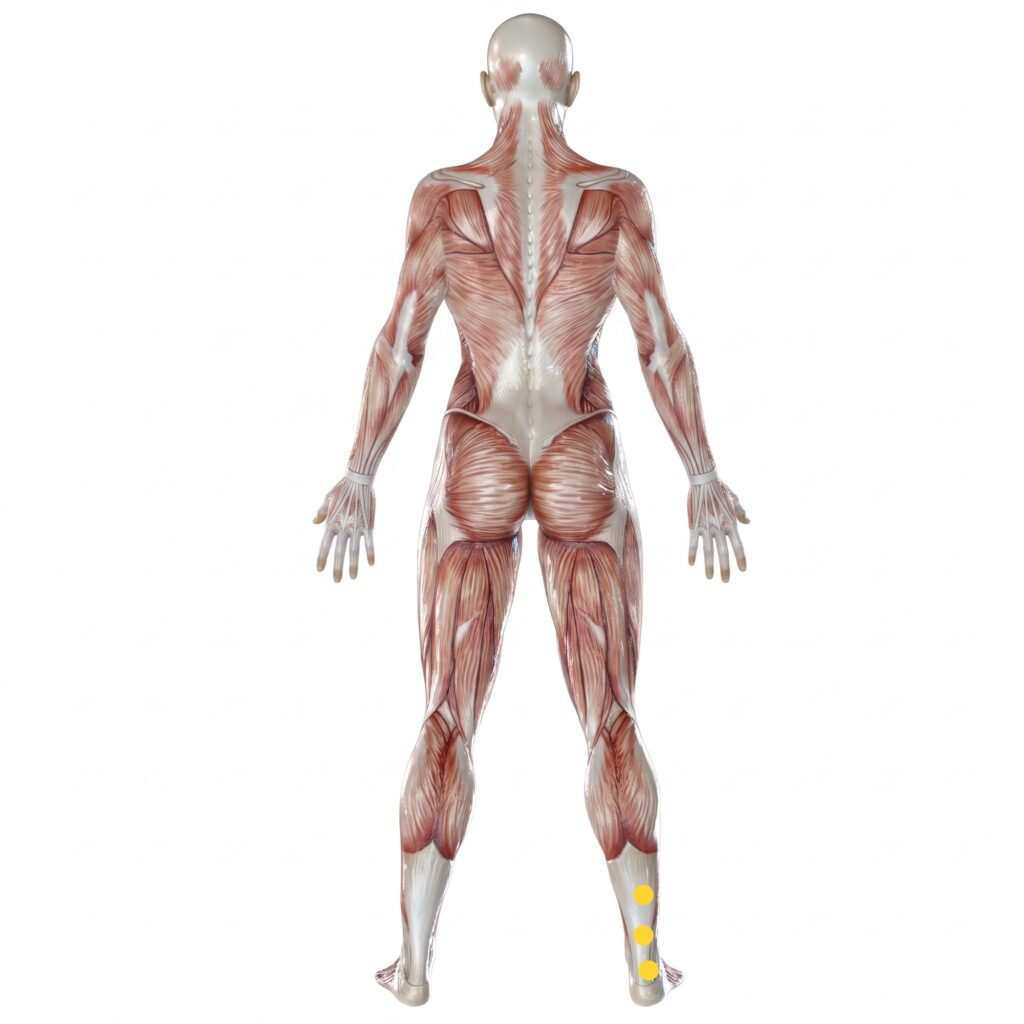
Session 2 (about one month later): the pain had fallen to about 15%. We widened the area — foot, calf and thigh — and balanced the fascia overall. The remaining discomfort no longer bothered her.
Follow-up: at a third visit three months later for low back pain, we asked about the ankle.
“I don’t notice it at all anymore”
“The ankle doesn’t bother me at all anymore. Padmasana, of course — whatever pose I take, there’s no discomfort at all. Thank you so much.” She can sit in the basic poses without pain and concentrate on going deeper into yoga.
Before you give up on it
Many people live with lingering discomfort. The cause may not be where you touch it, and reading the body through its fascial connections can reveal a surprising cause.
This clinic is not a medical institution. Individual results vary; this article describes one person’s course. If you have concerning symptoms, please consult a medical institution.